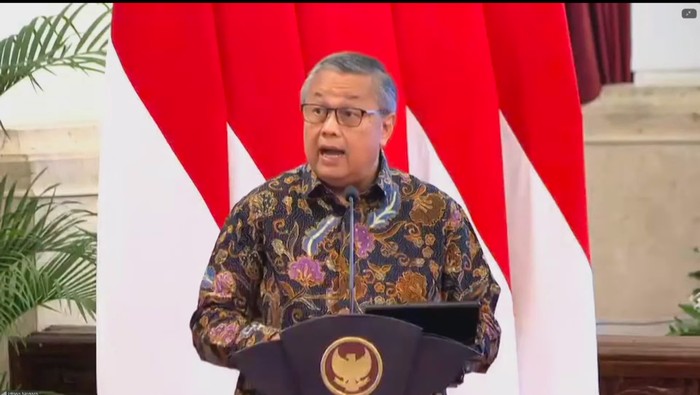
In a genuinely surprising development, Bank Indonesia Governor Perry Warjiyo has resigned from his post, effective July 25, 2026 — with the resignation formally confirmed by the government and announced to the public on July 27. Senior Deputy Governor Destry Damayanti has been appointed acting Governor while a permanent replacement is determined through the process set out in Indonesia's central bank law. The news has rattled currency markets, with the rupiah opening weaker and drifting toward the Rp18,000-per-dollar level.
Here's what actually happened, why markets reacted the way they did, and what it means for your own finances in the days ahead.
What Happened, Exactly
Perry Warjiyo first became BI Governor in 2018 and was reappointed for a second term running through 2028. His resignation letter was received by the government and formally accepted by President Prabowo Subianto, with the State Secretary confirming the resignation was voluntary and for personal reasons — after roughly seven years leading the central bank. Some sources have suggested health considerations may be behind the decision, though officials have not detailed the specific personal reasons publicly.
Under Indonesia's central bank law, a Board of Governors member cannot be dismissed during their term except through resignation, and when a Governor's seat becomes vacant before a permanent replacement is appointed, the Senior Deputy Governor automatically steps in as acting Governor. That's exactly what happened here: Destry Damayanti, an economist who previously earned her graduate degree from Cornell University, now holds the role on an interim basis.
Why Markets Reacted With Concern
Currency markets generally dislike uncertainty, and a sudden, unexplained departure of a central bank's top official — especially one who had led through a full term and part of a second — introduces exactly that. Analysts pointed to the resignation as a specific driver of rupiah weakness this week, even though other factors, like the earlier de-escalation of Middle East tensions between the US and Iran, might otherwise have supported the rupiah strengthening rather than weakening.
The core concern isn't necessarily about Destry Damayanti's competence — she's a senior, experienced economist stepping into an acting role under a clearly defined legal process — but about the transition period itself, and questions over how quickly a permanent Governor will be appointed and whether policy continuity will hold in the meantime.
What This Means for Monetary Policy Continuity
This leadership change lands at a particularly sensitive moment: Bank Indonesia has just gone through a rate-hiking cycle this year to defend the rupiah, and markets were already closely watching whether the central bank would hold or hike further at its most recent policy meeting. A leadership transition doesn't automatically change BI's institutional policy stance — decisions are made collectively by the Board of Governors, not unilaterally by one person — but markets tend to price in some uncertainty until a permanent Governor is confirmed and their policy priorities become clear.
What to Watch Next
The timeline for a permanent Governor appointment. Indonesian law sets out a specific process for nominating and confirming a new BI Governor, typically involving presidential nomination and parliamentary (DPR) approval. How quickly this moves will shape how long the "uncertainty premium" persists in currency markets.Whether Destry Damayanti's acting leadership maintains policy continuity. Her public statements so far have emphasized commitment to maintaining rupiah stability, payment system integrity, and financial system stability — signaling institutional continuity rather than an abrupt shift.How the rupiah behaves over the coming days, since currency markets often overreact initially to leadership uncertainty before settling once more information becomes available.
What This Means for Your Finances Right Now
Don't overreact to short-term currency volatility tied to this news specifically. Leadership transitions create temporary uncertainty premiums that often fade as clarity emerges, rather than permanent shifts in fundamentals.If you have upcoming foreign-currency needs, this is a reasonable moment to monitor the rupiah a bit more closely, given the added layer of uncertainty on top of existing pressures.Watch for official BI communications rather than speculation, since Destry Damayanti and other officials will likely provide further clarity on policy continuity in the coming days.Recognize this as one of several factors currently affecting the rupiah, alongside the recent BI rate decisions and global rate expectations from the Fed's upcoming meeting — not an isolated shock in an otherwise calm environment.
Quick FAQ
Is Destry Damayanti now permanently the BI Governor? No, she holds the role as acting Governor while the formal process to appoint a permanent replacement plays out, which typically involves presidential nomination and parliamentary approval.
Does this resignation change Indonesia's current interest rate policy? Not directly. Rate decisions are made collectively by BI's Board of Governors, and officials have publicly emphasized continuity in maintaining rupiah stability and financial system integrity during the transition.
How long could the rupiah stay under pressure because of this? It's genuinely uncertain, but currency markets often calm down once a clear timeline for permanent leadership emerges, so the coming days and weeks are worth watching for further official clarity rather than assuming prolonged instability.
Conclusion
Perry Warjiyo's resignation as Bank Indonesia Governor, after roughly seven years leading the institution, has introduced a genuine element of uncertainty into currency markets already navigating a complex environment. The transition itself follows a clear legal process, and Destry Damayanti's early statements suggest continuity in BI's core priorities rather than a policy pivot. For most households and investors, the most useful response is to watch official communications over the coming days rather than reacting to the initial market jitters, and to view this as one factor among several currently shaping the rupiah's direction.
Written by
Aaqil Umais ZabirFinancial education writer at Kontrol Uang
Aaqil Umais Zabir writes personal finance guides for Kontrol Uang, focusing on budgeting, transaction tracking, zakat, and practical everyday financial decisions for Indonesian readers.
.jpg)