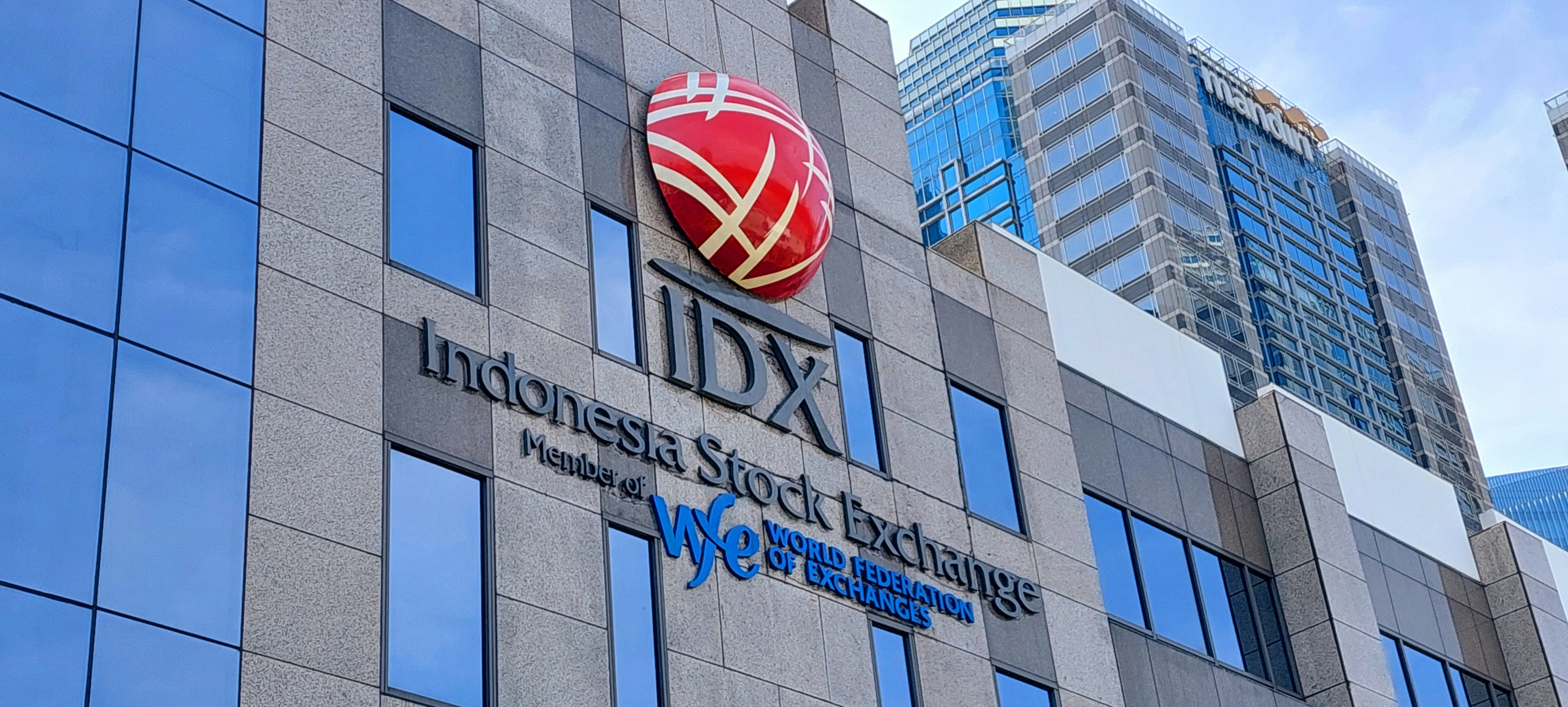
Indonesia's benchmark stock index, the IHSG, closed up 1.74% to 6,340.02 this week, extending a rally that's been building over recent sessions. The bigger story, though, is the round trip it took to get here: the index hit an all-time high above 9,170 back in January 2026, then fell as low as roughly 5,318 by early June — a peak-to-trough decline near 20%, technically entering correction territory — before staging a recovery over the past several weeks.
For retail investors who either panicked and sold near the bottom or sat on the sidelines the entire time, the natural question now is whether this rebound is a genuine opportunity or a rally that's already run its course.
What's Actually Driving the Rebound?
Several factors are feeding this month's momentum:
Anticipation around this week's Bank Indonesia rate decision. Markets often move on expectations before the actual announcement, and uncertainty over whether BI would hold or hike has kept trading active.Regional strength. Indonesia's rally coincided with gains across Asian markets, including Hong Kong's Hang Seng and China's CSI 300, following the People's Bank of China holding its loan prime rates steady — a sign of broader regional risk appetite improving, not something isolated to Indonesia alone.Strong corporate earnings. Several listed banks and companies posted stronger first-half profit growth compared to the same period last year, giving investors concrete reasons beyond sentiment to buy back in.Continued foreign capital inflows. Foreign investors have kept buying into Indonesian equities and government securities, which tends to support both the stock market and the rupiah simultaneously.
Is This Rally Sustainable, or a Dead-Cat Bounce?
Nobody can answer this with certainty, and any source claiming otherwise should be treated skeptically. What's useful is understanding the range analysts are actually watching: current support levels are estimated around 6,111 and 5,839, with resistance around 6,377 and 6,599. If the index holds firmly above its recent lows and clears resistance levels with real volume behind it, that's typically read as a healthier signal than a rally driven by a single day's news headline.
It's also worth remembering the index just experienced a roughly 20% swing from peak to trough within six months. That kind of volatility is a reminder that Indonesian equities, like most emerging markets, can move sharply in both directions — which matters more for your strategy than trying to call the exact bottom or top.
Should You Buy Individual Stocks Right Now?
Some analysts are currently recommending specific approaches like "buy on weakness" for select large-cap names, and "trading buy" calls for others showing short-term momentum. These are legitimate professional opinions, but it's worth being clear about what they are: short-to-medium-term trading calls, not guaranteed outcomes, and every research note carries the same disclaimer — a recommendation isn't a promise, and any investment decision and its consequences rest with the investor.
For most retail investors without the time to actively monitor daily price action, chasing individual stock tips based on a single day's rally carries meaningfully more risk than a diversified, long-term approach.
A More Sustainable Approach for Retail Investors
Use dollar-cost averaging instead of trying to time the exact bottom. Investing a fixed amount regularly — whether the index is at 6,100 or 6,400 — smooths out the impact of short-term swings and removes the emotional pressure of guessing the perfect entry point.Favor diversified instruments over single-stock bets, such as index funds or diversified mutual funds, especially if you don't have the time or expertise to analyze individual company fundamentals.Match your equity exposure to your actual time horizon. Money you'll need within the next one to two years generally doesn't belong in a market that can swing 20% in six months.Don't let a single green week erase the memory of the correction. The same index that's rallying now fell sharply for months beforehand — a healthy strategy accounts for both possibilities, not just the current mood.
What This Means If You Already Held Through the Correction
If you stayed invested through the drop to around 5,318 and are now seeing your portfolio recover, resist the urge to declare victory and abandon your original plan. Market cycles like this one are exactly why long-term investors are advised to stay the course rather than react to short-term volatility — the investors who panic-sold near the bottom in June locked in losses that the current rebound can't undo for them, while those who held (or kept buying through the dip) are now seeing the benefit of that discipline.
Quick FAQ
Has the IHSG fully recovered its January 2026 high? No. Even at 6,340, the index remains well below its all-time high of over 9,170 set in January, so "recovery" here means recovery from the June low, not a full round trip back to the peak.
Is now a bad time to start investing since the market already rallied? Not necessarily. Trying to time a market perfectly is difficult even for professionals. If your time horizon is long-term, a disciplined entry today is generally more useful than waiting indefinitely for a "better" price that may or may not arrive.
What's the difference between "buy on weakness" and "trading buy" calls from analysts? "Buy on weakness" generally suggests waiting for a price dip within an uptrend before buying, while "trading buy" suggests near-term upward momentum worth acting on soon. Both are short-term tactical views, not long-term investment theses.
Conclusion
The IHSG's rebound to 6,340 reflects a real mix of regional momentum, strong earnings, and foreign capital inflows — not just short-term hype. Whether it continues climbing or cools off is genuinely uncertain, and no analyst can promise which way it breaks next. What you can control is your own approach: use disciplined strategies like dollar-cost averaging, favor diversification over chasing individual stock tips, and size your equity exposure to a timeline you can actually tolerate through the next correction, whenever it comes. This isn't financial advice — for decisions specific to your situation, a licensed financial advisor is the right person to consult.
Written by
Aaqil Umais ZabirFinancial education writer at Kontrol Uang
Aaqil Umais Zabir writes personal finance guides for Kontrol Uang, focusing on budgeting, transaction tracking, zakat, and practical everyday financial decisions for Indonesian readers.