If you're still recording sales in a notebook or a basic spreadsheet, you're not alone — but you're also almost certainly losing money you can't see. A point-of-sale (POS) system does more than print receipts; done right, it becomes the financial nervous system of a small business, tracking every sale, every item of inventory, and every rupiah of revenue in real time. According to industry research from Deloitte Digital, businesses using a modern POS system see transaction data accuracy as high as 99%, compared to manual, notebook-based bookkeeping.
This guide walks through what a POS system actually does, what to look for, and how to avoid overpaying for features your business doesn't need.
What a POS System Actually Does
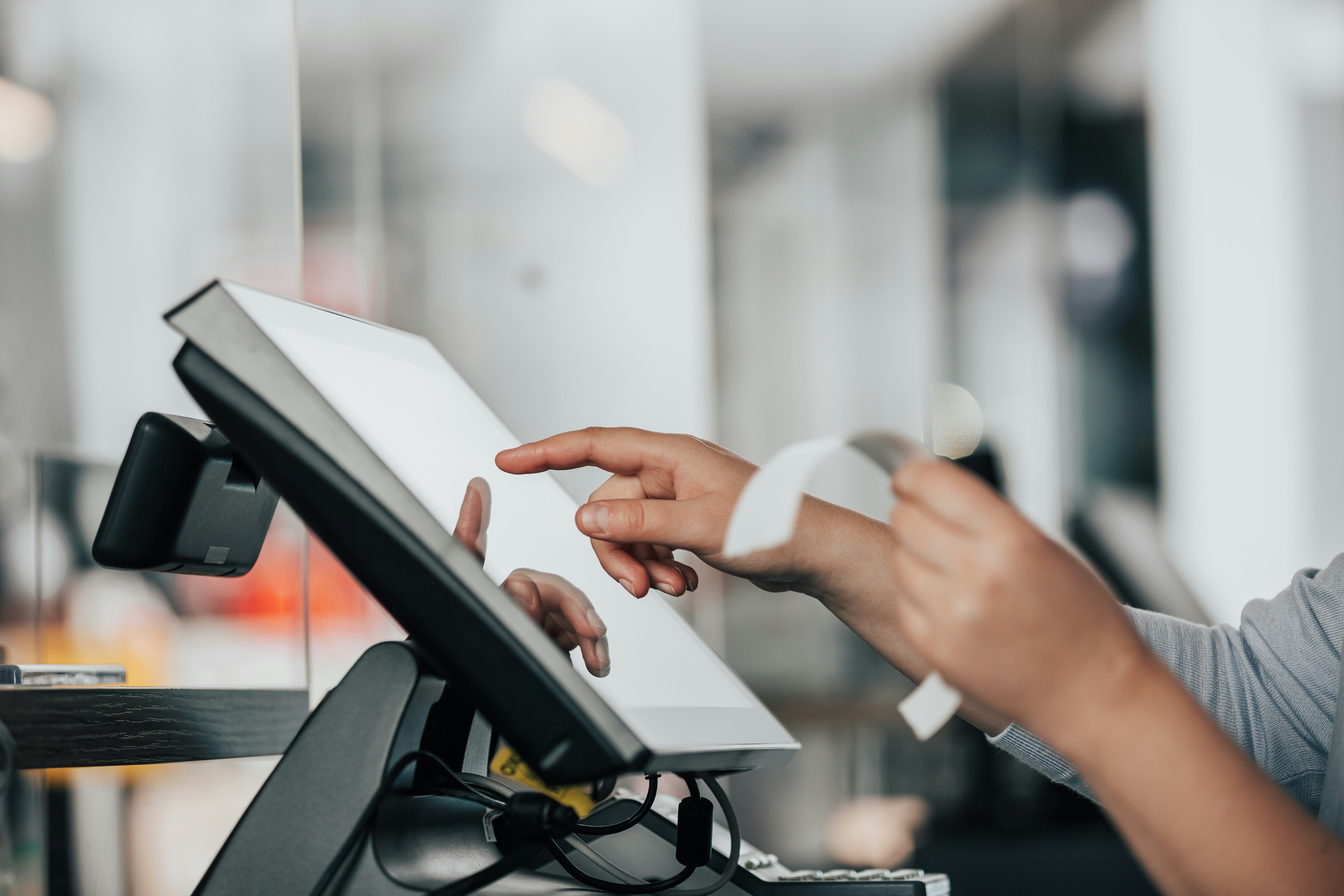
At its core, a POS (Point of Sale) application replaces a manual cash register with a digital system that records sales transactions automatically. Beyond that basic function, most modern POS platforms also handle:
Inventory tracking — automatically deducting stock as items sell, and flagging when it's time to reorder.Financial reporting — generating real-time profit-and-loss summaries instead of requiring manual reconciliation at month-end.Payment integration — accepting cards, e-wallets, and QRIS payments within the same system that records the sale.Multi-store and multi-staff management — useful once your business grows beyond a single location or cashier.Marketplace and omnichannel integration — syncing online and offline sales into one unified sales record, which matters increasingly for businesses selling both in-store and through e-commerce platforms.
Why This Matters for Your Cash Flow, Not Just Your Sales
Many small business owners treat a POS system as a sales tool and their bookkeeping as a separate task done later. This separation is exactly where cash flow visibility breaks down. When your POS and your financial records are the same system, you always know — in real time — how much cash is actually coming in, which products are actually profitable, and where inventory capital is quietly tied up in slow-moving stock. Businesses that discover cash flow problems late are almost always the ones still reconciling sales manually at the end of the month, by which point the damage is already done.
What to Look for When Choosing a POS System
Match the system to your business type. A food and beverage business benefits from kitchen-display integration and table/order management, while a retail store needs stronger barcode scanning and inventory features. Don't pay for restaurant-specific features if you're running a boutique, or vice versa.Check whether it works offline. Internet connectivity isn't always reliable, especially outside major cities. A POS that can process a sale offline and sync later prevents lost transactions during outages.Understand the real cost, not just the subscription fee. Some platforms charge separately for hardware, payment processing fees, or add-on modules like accounting integration. Add these up before comparing headline prices.Prioritize reporting quality over flashy features. A clean, accurate profit-and-loss report you'll actually check weekly is worth more than a dozen features you'll never use.Consider your growth trajectory, not just today's needs. If you're planning to open a second location or add staff within the next year, choose a system that supports multi-store management from the start, rather than migrating platforms later.
Common Mistakes When Choosing a POS
Choosing based on price alone. The cheapest option sometimes lacks basic reporting or offline functionality, which can cost you far more in lost sales or bookkeeping headaches than the subscription savings are worth.Ignoring staff training time. A powerful system that your cashiers can't use quickly and accurately creates more errors than it prevents.Skipping the data migration plan. If you're switching from an existing system, make sure historical sales and inventory data can actually transfer over, rather than starting from a blank slate.
A Simple Framework for Deciding
Ask yourself three questions before choosing:
What's my actual transaction volume? A low-volume business rarely needs enterprise-level features and their associated cost.Do I sell online, offline, or both? This determines how important omnichannel and marketplace integration really are for your specific case.Who's using this system day to day? A system chosen by an owner but never actually adopted comfortably by staff tends to get abandoned within months, reverting the business back to manual tracking.
If you want a curated, side-by-side comparison of POS options suited to different types of Indonesian small businesses, our team put together a dedicated guide at kontroluang.com/pos, covering pricing, features, and which system fits which kind of business.
Quick FAQ
Do I need a POS system if I run a very small business? Even a single-person stall benefits from basic sales tracking, since it's the only reliable way to know which products are actually profitable rather than just popular. Many providers offer free or low-cost tiers suited exactly to this scale.
Is a free POS app good enough, or should I pay for a premium plan? Free tiers often cover basic sales recording and simple inventory, which is enough for very small operations. Once you need multi-store management, advanced reporting, or marketplace integration, a paid tier usually pays for itself through better inventory control alone.
Can I switch POS providers later without losing my data? It depends on the platform, which is exactly why it's worth checking export and migration options before committing, rather than assuming your historical data will transfer automatically.
Conclusion
A POS system is one of the highest-leverage tools a small business can adopt, not because it looks modern, but because it turns invisible cash flow gaps into visible, actionable data. Choose based on your actual business type and growth plans rather than the flashiest feature list, calculate the true total cost before committing, and make sure whoever runs your register day to day can actually use the system comfortably. The right POS pays for itself many times over simply by showing you, clearly and in real time, where your money is actually going.
Written by
Aaqil Umais ZabirFinancial education writer at Kontrol Uang
Aaqil Umais Zabir writes personal finance guides for Kontrol Uang, focusing on budgeting, transaction tracking, zakat, and practical everyday financial decisions for Indonesian readers.